How to Pick Restaurant Furniture That Survives a Decade of Dinner Rushes (And Still Looks Great Doing It)
A restaurant owner I know spent months perfecting her menu, her lighting, her staff training — and then furnished her 60-seat dining room with chairs that looked perfect in the supplier's catalog photos. Within a year, a third of those chairs had wobbly legs, two had cracked seats, and the finish on every tabletop near the kitchen pass had started peeling from heat and constant wiping down.
She had to reorder mid-operation, mid-season, while still serving customers. The "savings" from the cheaper supplier evaporated the moment she had to pay for replacements, plus the labor to swap them out, plus the slightly embarrassing wobble a customer feels two bites into their entrée.
Here's the uncomfortable truth about furnishing a restaurant: most owners are buying blind. They judge a chair or table by its photo, its price per unit, and the confidence of the word "commercial grade" in the supplier's deck — three things that tell you almost nothing about whether it'll survive eight hours of daily turnover, spills, dragging across tile floors, and the occasional customer who leans back a little too far.
Restaurant furniture isn't home furniture. It works a brutal shift every single day — sat in, slid, bumped by trays, wiped down with chemical cleaners, sometimes rained on if you've got a patio. The good news is that you don't need to be a carpenter to spot the difference between furniture built to survive that and furniture built to look good in a showroom for six months. You just need to know where to look before you sign the purchase order.
Start at the Joints, Not the Surface
If you want to know how a chair or table was really made, ignore the finish and go straight to where two pieces of wood meet — because in a restaurant, joints take far more abuse than they ever would in a home.
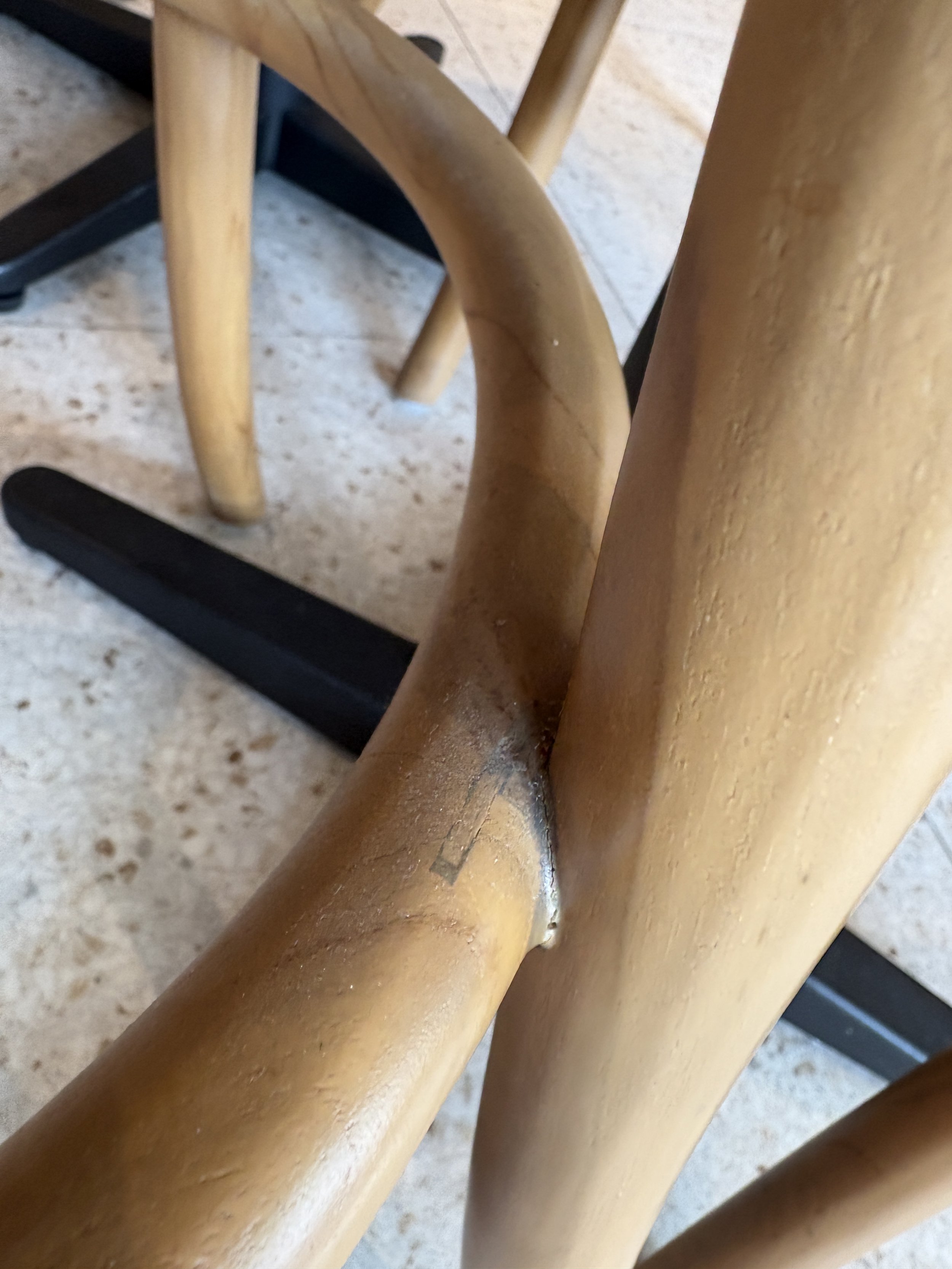
Flip a chair over. Look underneath the seat where the legs attach. Check where a tabletop meets its base. What you're looking for is joinery — the actual engineering holding the thing together, and the part that determines whether a chair survives a year of nightly service or starts wobbling by month three.
Mortise-and-tenon joints (one piece slotting into a carved socket in another), corner blocks reinforcing where legs meet the seat frame, and properly glued-and-doweled joints are signs that a piece was built for repeated stress, not just a single sale. These distribute the weight of someone sitting down hard, leaning back, or scooting their chair in for the hundredth time that week.
What you don't want to see: staples, exposed nails, or a suspicious amount of glue doing the work that a joint should be doing. Furniture held together primarily by fasteners and adhesive is furniture that's a few months of nightly service away from coming apart at the seams — and a wobbly chair is the kind of thing customers notice and mention in reviews.
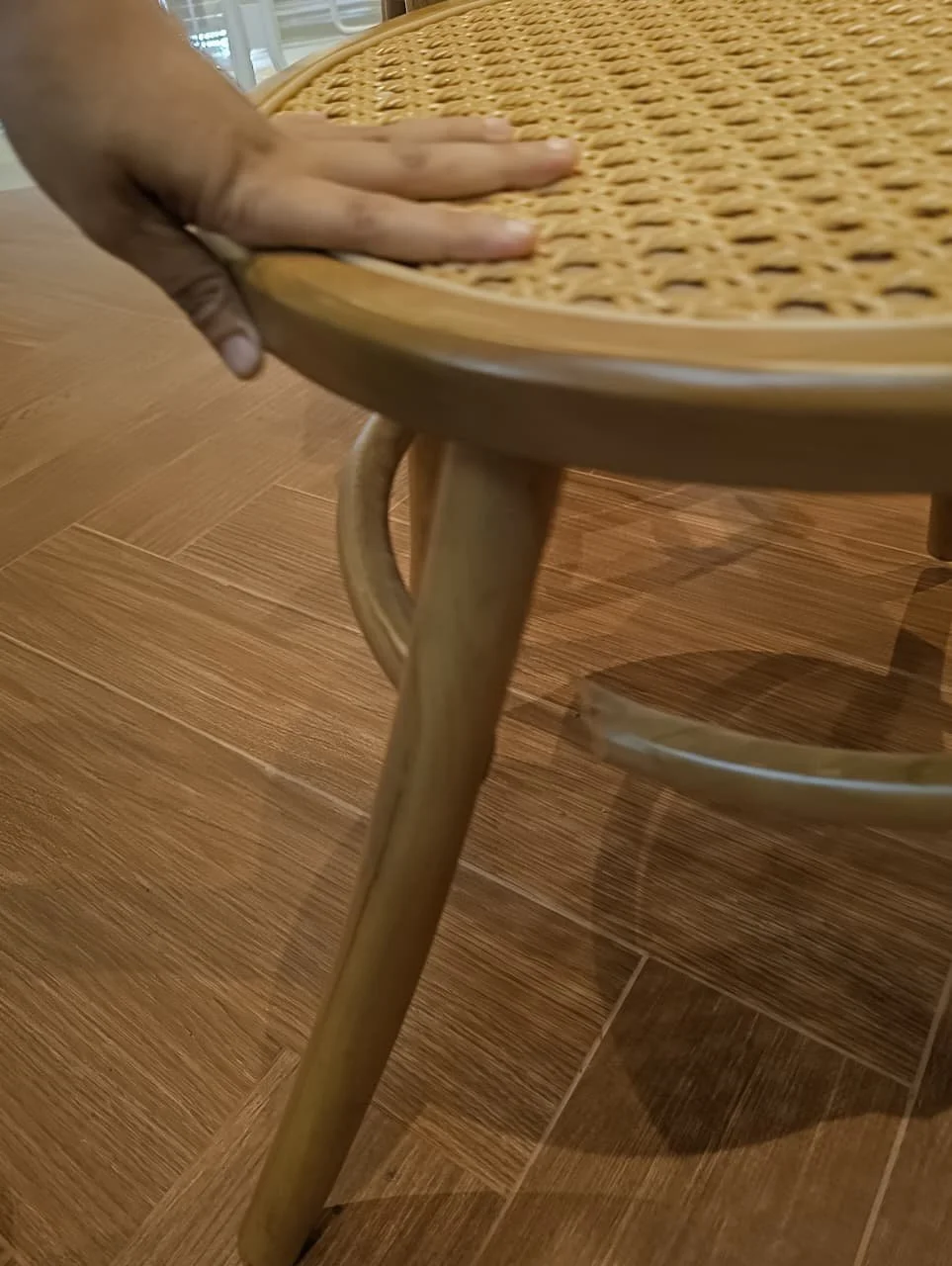
The Edge Test: Is It Actually Solid Wood? or Rattan ?
"Commercial grade solid wood" is one of the most casually misused phrases in furniture sourcing. A lot of what's sold under that label is actually veneer — a thin slice of real wood glued over particleboard or MDF — and there's a simple way to check before you commit to twenty or forty units.
Look at an edge. Any edge: a tabletop lip, the underside of a chair seat, the edge of a bench top. Solid wood shows continuous grain running through the entire thickness of the material. Veneer shows a thin, distinct layer of wood sitting on top of something else — sometimes you can even see the seam where the veneer was cut.
This matters more for you than for a home buyer, because veneer over particleboard doesn't hold up to the moisture, spills, and constant wiping a dining room sees. Particleboard swells and delaminates when it gets wet repeatedly — and in a restaurant, something is getting spilled on a table every single shift. Quality veneer over solid plywood can be a fine choice for large flat surfaces, but you should know what you're paying for, and the price should reflect it.
Pick It Up
This sounds almost too simple to be useful advice, but it works: heavy is usually good — though in a restaurant, you're balancing that against staff needing to move chairs and stack them for cleaning.
Well-made furniture has density. A chair that feels suspiciously light for its size is often telling you it's made from low-density wood or padded out with particleboard where it matters. Pick up a chair from one supplier's sample and one from another, side by side. Push down on a table corner and feel for flex. Your hands will catch things your eyes — and the supplier's glossy lookbook — never will.
Finish Matters More in a Restaurant Than Anywhere Else
Run your hand across a tabletop or chair arm — it should feel smooth with no rough patches, drips, or uneven sheen. But for a restaurant, ask one more question: what's the finish rated for? Tables get wiped down with sanitizer or degreaser every single turnover. A finish meant for occasional home dusting will dull, cloud, or peel within months under that kind of chemical exposure. Ask your supplier specifically whether the finish is rated for commercial cleaning products, not just "durable."
Check finish coverage in joints, corners, and undersides too — rushed work often skips these, and those are exactly the spots where spilled drinks and wet rags do the most damage over time.
Trust the Wobble Test
Set a chair or table on a flat, hard floor — your own restaurant floor, ideally, since tile and concrete show wobble more than a showroom's carpeted display area. Gently rock it. Any movement at all usually means one of two things: uneven legs (an easy, if annoying, fix) or weak joinery (not an easy fix, and not something that gets better with eight months of nightly service). Either way, you've just learned something a glossy supplier deck never would have told you.
Why This Actually Matters
Furniture is one of the few line items in a restaurant build-out that customers physically touch, sit on, and judge you by for years after opening — long after the construction dust has settled and the opening-week press has faded. A wobbly chair or a peeling tabletop doesn't just cost you a replacement order; it quietly tells a paying customer that the place might be cutting corners somewhere else too, like the kitchen.
There's a place for budget furniture — a quick pop-up, a short-term lease, a concept you're still testing. But when you're furnishing a dining room you expect to run for years, knowing how to read the actual construction of a chair or table, rather than its catalog photo, is the difference between a furniture budget and a furniture liability.
The next time you're sitting across from a supplier, sample chair in hand, deciding whether to place a forty-unit order, do the thirty-second version of all this: check a joint, check an edge, pick it up, give it a wobble, ask about moisture content. Your front-of-house team — and your bottom line — will thank you eighteen months from now.
Why you need a specialist to source furniture for your restaurant ( especially in Indonesia. )
Opening a new restaurant in Indonesia is an exciting venture — but it's also one of the most complex projects you'll ever take on. Between permits, kitchen equipment, staffing, and menu development, furniture can feel like an afterthought. Many first-time restaurant owners default to browsing a generic furniture store or ordering whatever's available online. It's quick, it's easy, and it feels like one less thing to worry about.
But here's the truth: your furniture is one of the most powerful tools you have to define your restaurant's identity, drive repeat visits, and justify your price point. Getting it wrong is an expensive mistake — one that's very hard to fix once the doors are open.
This is exactly why working with a specialist to source your restaurant furniture in Indonesia is worth every rupiah.
1. Indonesia Has World-Class Furniture — But You Need to Know Where to Look
Indonesia is one of the world's leading producers of high-quality hospitality furniture. Java alone is home to hundreds of skilled artisan workshops producing teak furniture, rattan furniture, and custom carved pieces that are exported to hotels and restaurants across Europe, the Middle East, and Australia.
The problem? The best workshops don't have slick websites or Instagram accounts. They don't advertise. They work through networks built on years of trust and relationship.
A specialist like Javarajin has spent years building exactly these connections — with over 50 vetted artisans and independent workshops across Java. That means you get access to exceptional quality at competitive prices, without spending months trying to find it yourself.
---
2. Restaurant Furniture Has Different Requirements From your Home Furniture
A dining chair that looks beautiful in a showroom can be a nightmare in a working restaurant. Hospitality furniture needs to withstand a very specific set of demands:
- High turnover and daily wear — chairs and tables are moved, scraped, and sat on hundreds of times a day
- Easy cleaning — surfaces need to handle spills, cleaning products, and humidity
- Stackability or compact sizing — especially important for smaller Indonesian cafe and restaurant spaces
- Structural durability — a wobbly chair or table destroys the guest experience instantly
A furniture specialist understands these requirements and sources accordingly. They'll steer you toward the right wood finishes, joinery techniques, and materials — like sustainably sourced teak or properly treated rattan — that are built for commercial use, not just home interiors.
---
3. Custom Restaurant Furniture Sets You Apart from Every Competitor
Indonesia's restaurant scene is growing rapidly, especially in Jakarta, Bali, and Yogyakarta. Standing out is harder than ever. Your interior design — including your furniture — is one of the most powerful ways to differentiate your venue and give guests a reason to share their experience on social media.
Generic furniture from a mass-market store looks exactly like what it is. Custom furniture, designed around your brand concept and crafted by skilled Javanese artisans, tells a story. It creates a sense of place that guests can't find anywhere else.
Working with a specialist gives you access to bespoke design — furniture made to your exact dimensions, finishes, and aesthetic. Whether you're building a rustic cafe, a modern bistro, or an upscale hotel restaurant, custom hospitality furniture makes the difference between a space that feels assembled and one that feels intentional.
---
4. Procurement in Indonesia Can Be Complicated — A Specialist Saves You Time and Money
Sourcing furniture independently in Indonesia, especially if you're not based here or don't speak Bahasa Indonesia fluently, comes with real risks:
- Miscommunication on dimensions, finishes, or quantities
- Deposits paid to unreliable suppliers with no recourse
- Delays that push back your opening date
- Quality inconsistencies across large orders
A specialist manages the entire procurement process on your behalf — from initial briefing and design, to supplier negotiation, quality control, and delivery logistics. They've already made the costly mistakes so you don't have to.
At Javarajin, we've worked on projects from boutique cafes to full hotel fit-outs. We know what can go wrong, and we build processes that prevent it.
---
5. The Cost of Getting It Wrong Is Higher Than the Cost of Getting It Right
Many restaurant owners try to save money on furniture by going direct or choosing the cheapest option available. It seems logical — furniture is just furniture, right?
But consider the real costs of the wrong decision:
- Replacing furniture within the first year because it wasn't built for commercial use
- A mismatched interior that confuses your brand identity and turns guests away
- Delays to your opening caused by unreliable suppliers
- Lost revenue from a space that doesn't photograph well and fails to attract walk-in traffic
A specialist's fee pays for itself many times over when weighed against these risks.
Javarajin is a Jakarta-based hospitality consultancy connecting restaurants, hotels, and cafes with authentic, handcrafted furniture from Java, Indonesia. We specialise in custom furniture, rattan furniture, teak furniture, and full hospitality procurement.